Johto City Review
In which I go through the layouts of the Johto city. Johto is one of my favorite regions, even in its janky Gen II incarnation. Let's see what interesting design details they have.
From the Gameboy Advance on, towns in Pokemon games have been able to have expanded and unique tilesets which lets each town have its own distinct look. The Gen II games were working with some important restrictions - limited tilesets, no ‘transparent’ tiles (you are either on top of a tile or not, but you cannot be partially behind a tile), and smaller color palettes. This means the designers had to come up with a way to make each area of the game unique using a relatively small set of reusable assets as well as a handful of unique ones. Placement of tiles is thus very important, as well as the ratio of tiles (paved road to grass to big trees to small trees).
With that in mind, let’s look at the Johto towns.
Table of contents
New Bark Town
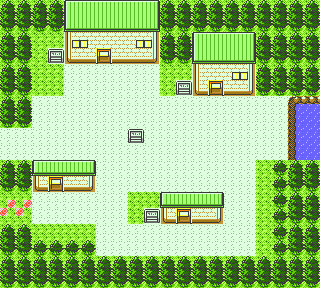
Most starting towns are small and have little going on in them and New Bark is no different. However, it still has some charm. The buildings are not arranged on a grid, which gives it a more organic feeling, as if this were a town that developed naturally without city planning. The small patches of grass that you can walk on break up the paved area, and the swaying flowers provide a nice nook to hide in. There is also the tantalizing promise of the water to the East. If this is your first Pokemon game, you may not be aware that you can even surf on that water! This gives you an incentive to come back later on when you've learned Surf.
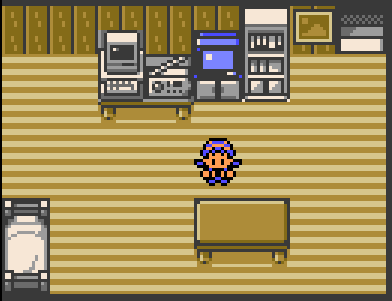
Our protagonist's house, unlike every other residential building, has two stories. I'm choosing to believe other houses do have two stories and we simply aren't able to see this because nobody wants to let us into the deeper recesses of their house. Anyway, our protagonist has a bookshelf, radio, PC, and a TV... nice.
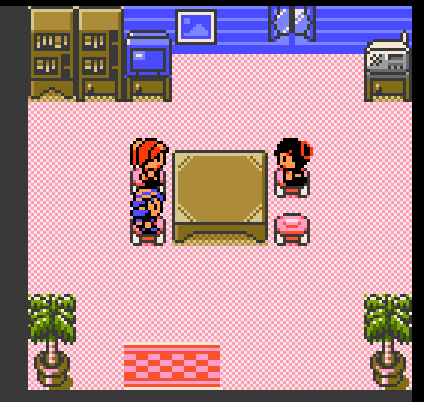
Here we see one of the two major styles of residential interiors in Johto. The standard modern style house has a micro checkerboard print, two palm trees (?), a TV, a map, a window, radio, two bookshelves, a center, stools. The rug also has a checkerboard pattern.
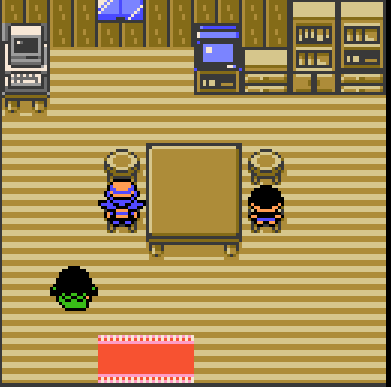
Within Johto, this wooden slat tiling is only found in New Bark Town. Elm's house and the player's house have it. These are the only two houses that have PCs. The rug also appears to be a unique fringed solid color rug.
Cherrygrove City
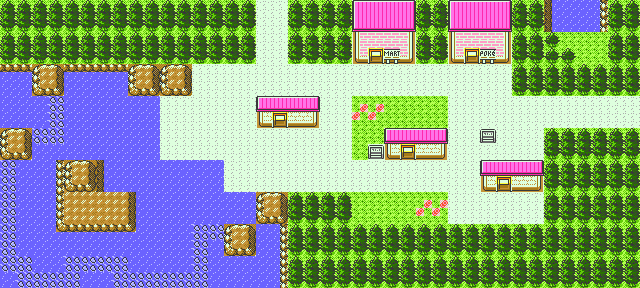
I like the pink roofs. The staggered placement of the houses is also welcome, as are the patches of grass and flowers. The outcropping you can surf to is another plus, as most players will probably have forgotten about Cherrygrove entirely later in the game.
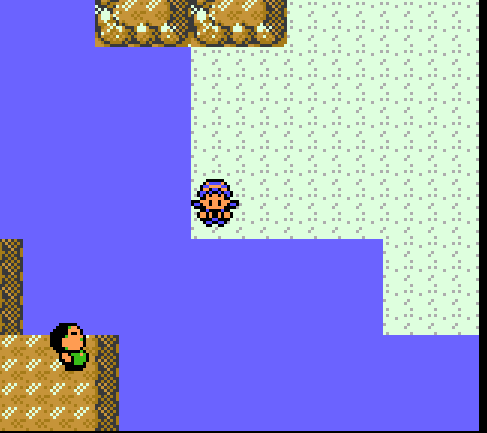
The way you can see him in the corner of the viewport is such a tease. I know when I got Surf and Fly, I went back here to see what this guy's secret was.
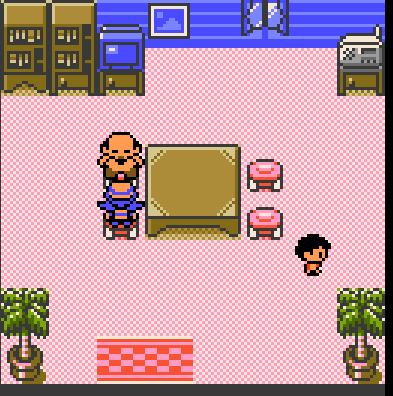
All the houses in Cherrygrove have the modern interior.
For the most part, though, this town is quite forgettable. I like the Old Man who shows you what a Pokemon center and a Mart are, but besides that, nothing really happens here. This town is a little awkward and weird, serving as a sort of tutorial town (and place to get confronted by your rival). It's similar to Oldale Town in Hoenn in that way. Viridian City kind of has a similar purpose in Kanto, but it teases you by letting you know there is a gym - you just cannot challenge it yet.
Violet City
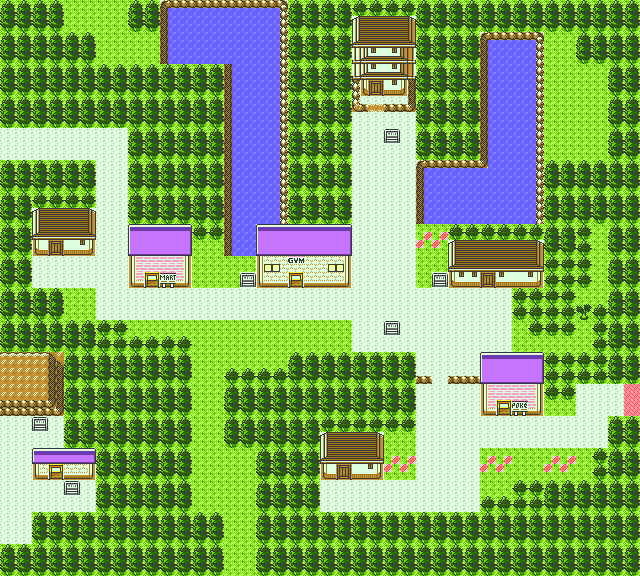
We're now beginning to get into the more elaborate designs. Most of the houses are not on a grid, though there appears to be a main street that the gym, school, and mart are placed on. Many of the houses are nuzzled into a corner, surrounded by smaller trees, which suggests a real life version of this place would have a lot of landscaping and smaller pines. We have surf secrets here, both to the northeast and northwest. There is also a cuttable tree.
We start having our big landmarks here. Sprout tower is one of the most memorable parts of the game for me, introducing what I view as the unapologetically Japanese tone of this game. The exterior looks like a pagoda, while the interior is constantly swaying. We also begin getting folklore in this town, with it being said that the Sprout tower was built around a 100 foot tall Bellsprout.
Overall, a good city, with a natural layout that incentivizes exploration and unique landmarks. Let's look at the interiors.
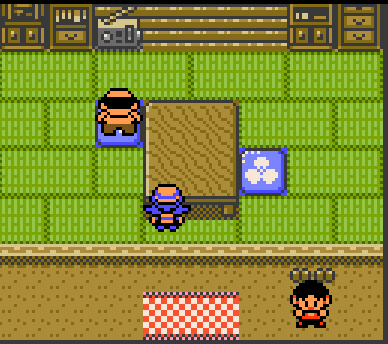
Here we see the second style of interior. This one is inspired by traditional Japanese aesthetics, featuring tatami mats, a place to put your outside shoes (bottom right corner), cushions for kneeling, and an elevated main part of the room to enter once you've taken your shoes off. An interesting detail for these houses is that they don't have TV, only radio. The welcome mat is also a different style, but I haven't in my research been able to find if this is supposed to represent a particular type of mat or rug.
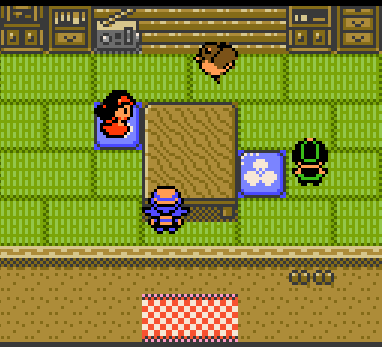
I always love when there are overworld Pokemon sprites you can interact with. Back when the games had these generic sprites, it was a surprise to see what Pokemon you would find.
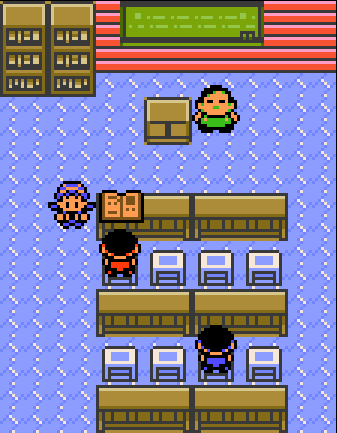
Earl's Pokemon Academy has seats, a lectern, and a green chalkboard. It also has a curious tesselating floor tile.
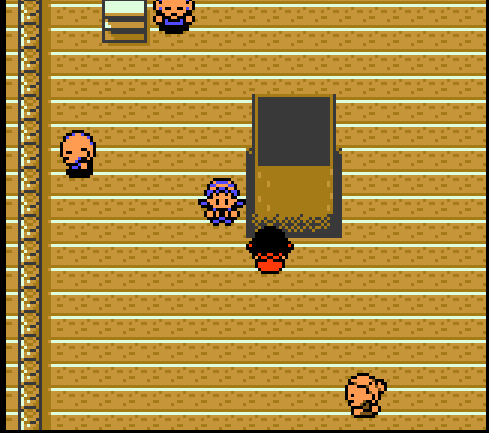
Sprout Tower! Those sure are long wooden slats, huh. When I was a kid, I thought the supporting center beam was a Gameboy.
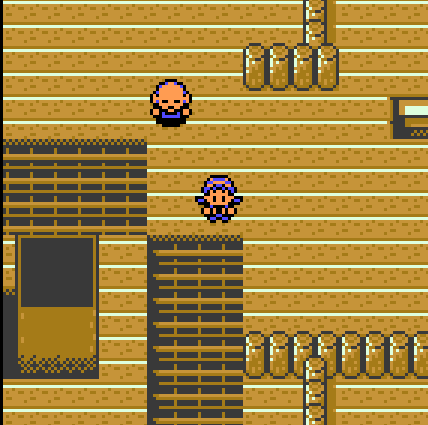
Here some sort of supporting structure is revealed, though I can't quite tell what it's supposed to be.
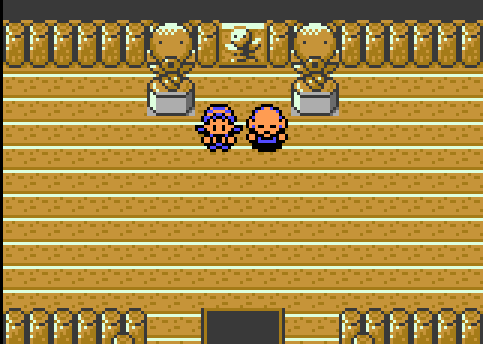
And here we have a "powerful painting" of a Bellsprout.
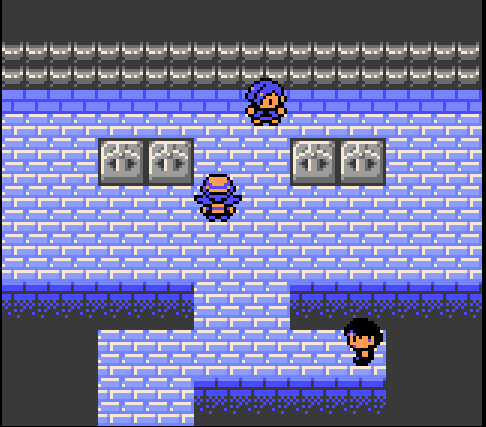
Falkner's gym is suspended in the void. I'm not sure what these pointed stones are suppoesd to be. There is an interesting crescent pattern on the wall.
Azalea Town
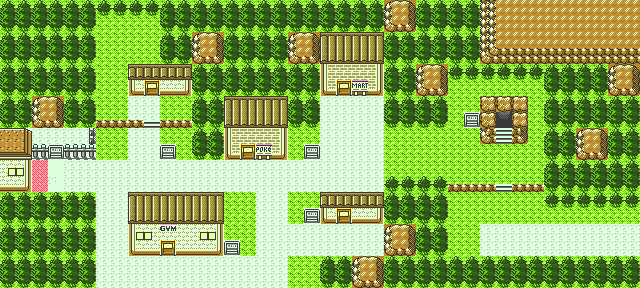
A smaller town on the level of Cherrygrove. I like the grass as well as the outcroppings of rock that appear in the unreachable regions. There's also a berry tree next to Kurt's house, which introduces you to berries.
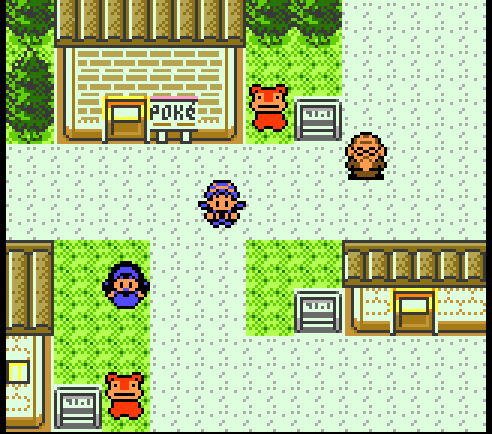
Saving this town from monotony is the Slowpoke well, which has a story attached to it about Slowpokes getting their tails cut off to be sold by Team Rocket. An old man was also pushed down the well (!) when you first come in. This also has a bit of folklore attached to it, as it is said that rain comes when the Slowpoke yawn. Once you defeat Team Rocket, Slowpoke even appear in the overworld.
The brown color palette is pleasant and matches the rocks quite well. Azalea town is cozy, though by itself (that is, not taking into account the interior of the Slowpoke dungeon or the routes surrounding it), its layout is quite boring.
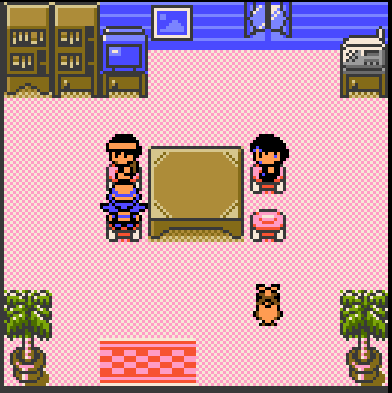
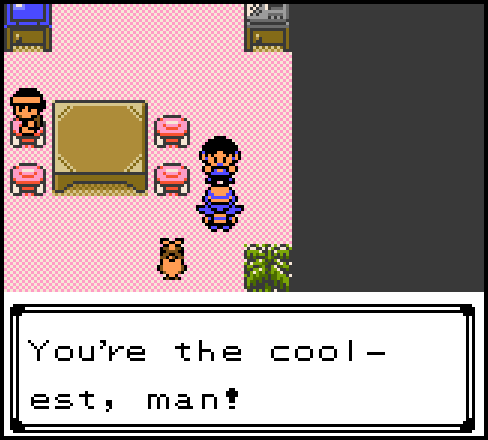
The Charcoal Kiln has modern interiors. The Farfetch'd you found in Ilex Forest is also here - a great detail! In the English version, there's a little localization gaffe where you're addressed as "man" even as a female character.
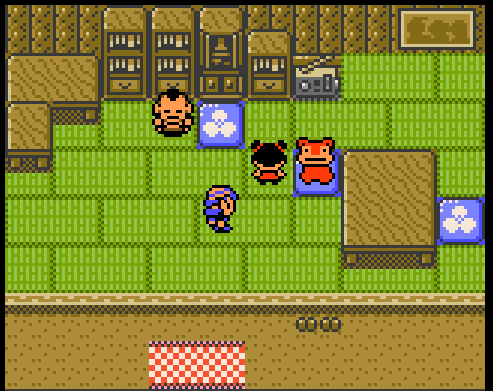
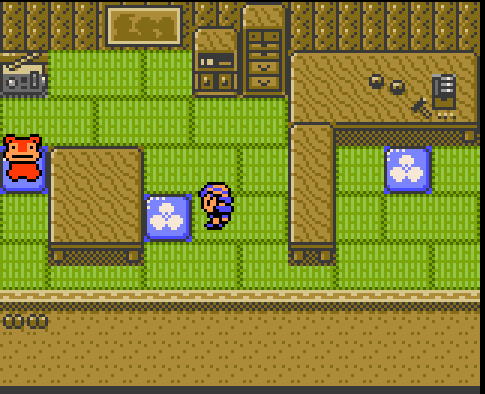
The other house, Kurt's, is traditionally styled. It is much more elaborate, featuring a workbench with his tools and some Pokeballs in progress. I wonder if this suggests that Kurt is more traditional than the people working at the Charcoal Kiln.
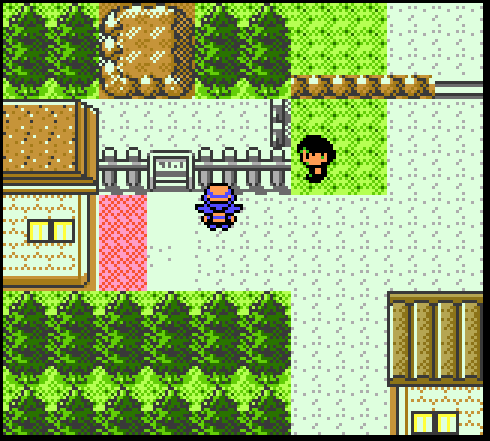
I always wondered what this little blocked off area was for when I was a kid. Turns out it's not for anything. It's just the only way to tile it.
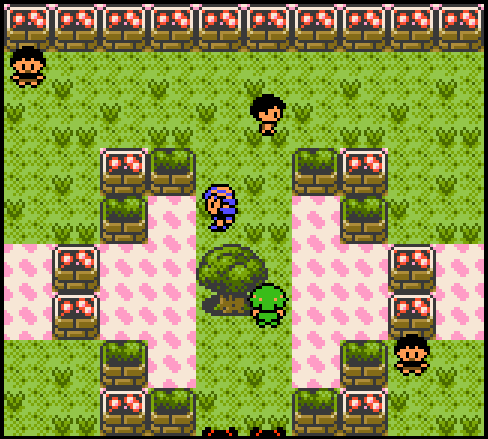
Bugsy's gym has a fascinating approach to interior decor. There's a pink footprint tile combined with a unique grass tile. Planters filled with bushes and flowers form the borders. A tree grows directly from the center of the gym, with no planter.
Goldenrod City
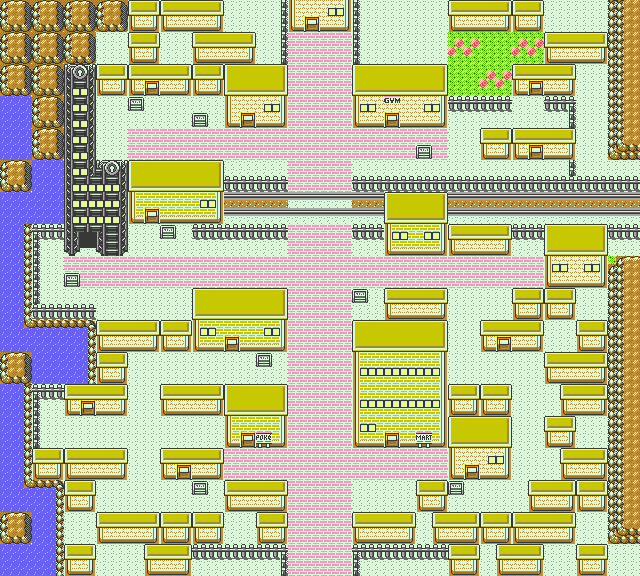
This is easily the most urban settlement in Johto, with not a scratch of grass to be seen except for by the florist's house. In addition, there is not just the common white paving, but actual red brick marking the common paths.
There are multiple landmarks in this city. The radio tower, the underground, the bullet train, and even the department store.
While you cannot surf from Goldenrod City, I think you can surf to it. Notice on the Western side there is one little patch of land with no gate surrounding it.
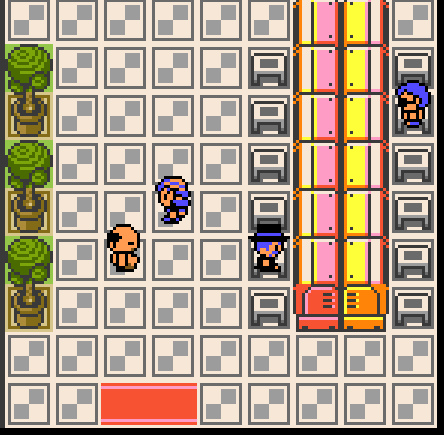
Goldenrod game corner has these plotted plants? And this curious big checkerboard tile. Different welcome mat as well, featuring a solid color with a pink border.
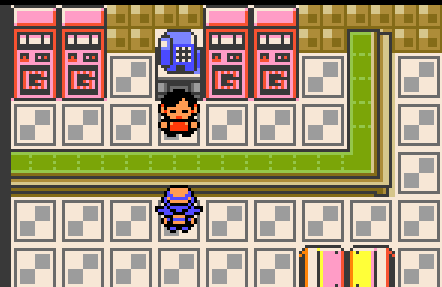
Some kind of number pad is behind the clerk. Is this where coins come from? What are the "G" machines for?
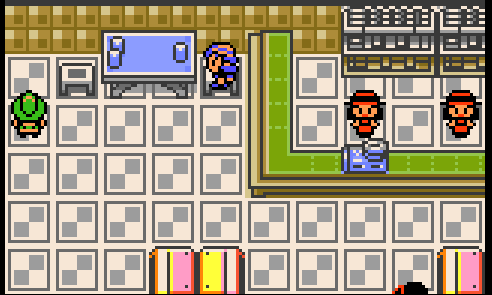
Helpfully, we have a drinks table to relax after a hard night of losing all your money. The racks behind the two ladies are hard to see, but the machine in front of the leftmost female clerk appears to be a coin funnel.
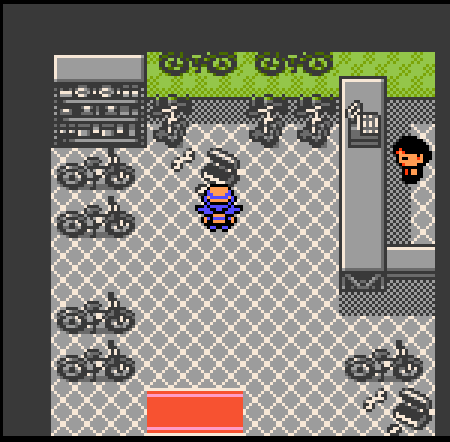
Bike shop has unique textures and same mat as Goldenrod Game Corner.
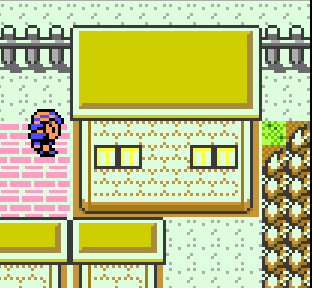
The tiling menace appears - a little square of green.
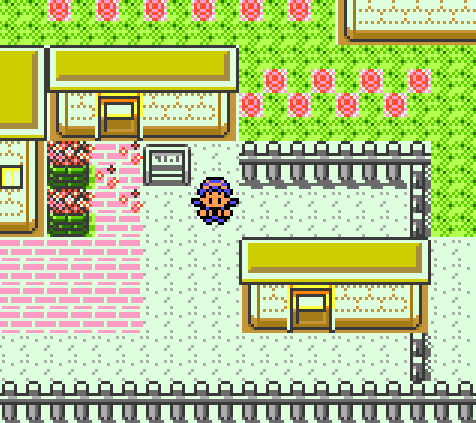
The entrance to the flower shop has unique planters and blossoms spread across the entrance.
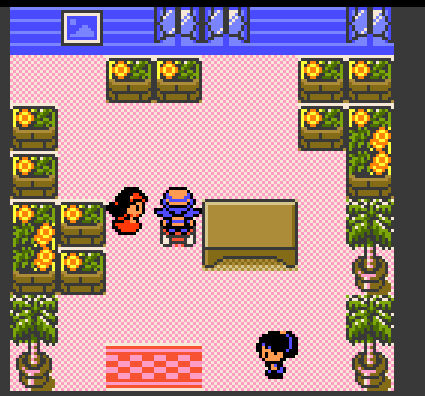
The flower shop has the pink micro checkerboard tiling and three palm trees. They seem to specialize in golden flowers, though not goldenrod, which lacks that sort of petal structure. No TV, as may be expected of a shop
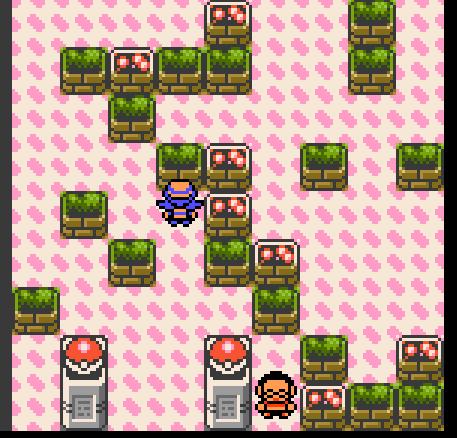
Whitney shares Bugsy's supplier for plants, flowers, and tiling, although she commits fully to the pink.
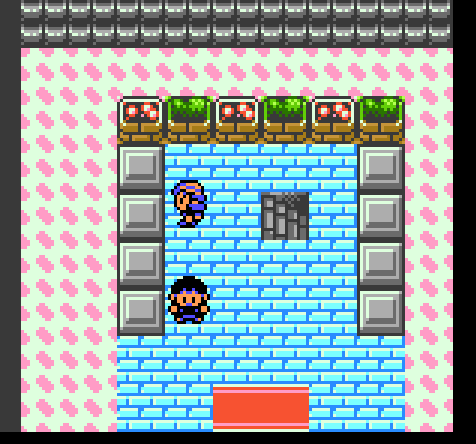
The entrance to the underground has the same metallic-looking wall that Falkner's gym had.
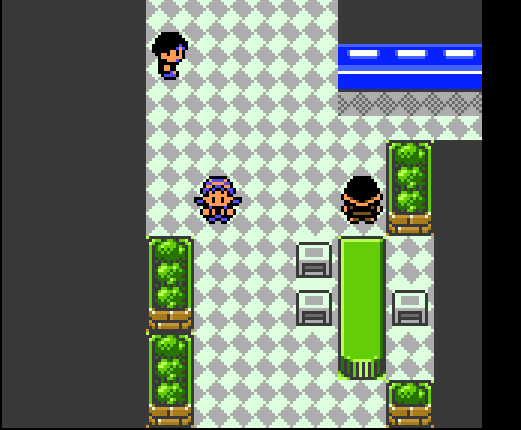
The underground mall has more planters and a windmill tiling. There's also shading on the tiles in the corridor leading to the underground puzzle, which is neat!
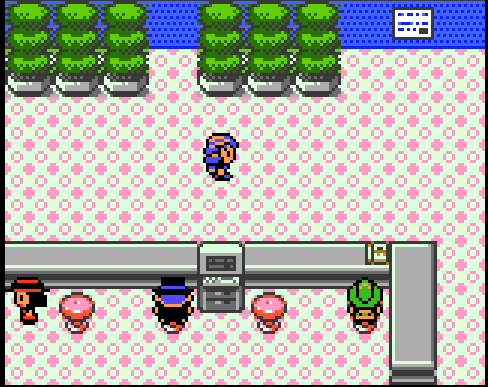
The Radio Tower has funky bulbous trees and this adorable pink bubble motif. The PC in the middle is used to check the ID number. I'm not sure what the small device in front of the green-haired clerk is.
Ecruteak City
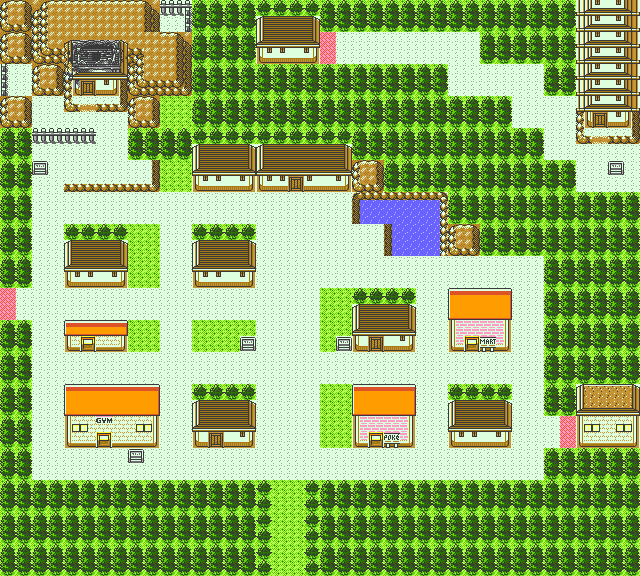
Ecruteak City is perfectly aligned on a grid. Goldenrod City is also on a grid, but the houses are placed haphazardly, giving the impression of heterogeneity. Ecruteak, in contrast, is almost perfectly homogenous. The smaller houses have trees placed behind them to be the same height as the Pokemon center and gym. The only house that doesn't fit in is the small one in the West, and even that one has symmetry with the bare patch of land immediately next to it with the sign describing the city.
This grid pattern is likely a tribute to the city of inspiration for Ecruteak, Kyoto. Kyoto, like many Japanese cities with traditional city structures, has long streets lined by long buildings. It seems that the designers tried to mimic this with the assets they had available in the game, without limiting freedom of movement for the player in such a small map. It doesn't quite read "Kyoto" to me, though. Perhaps this one is a victim of the technical limitations.
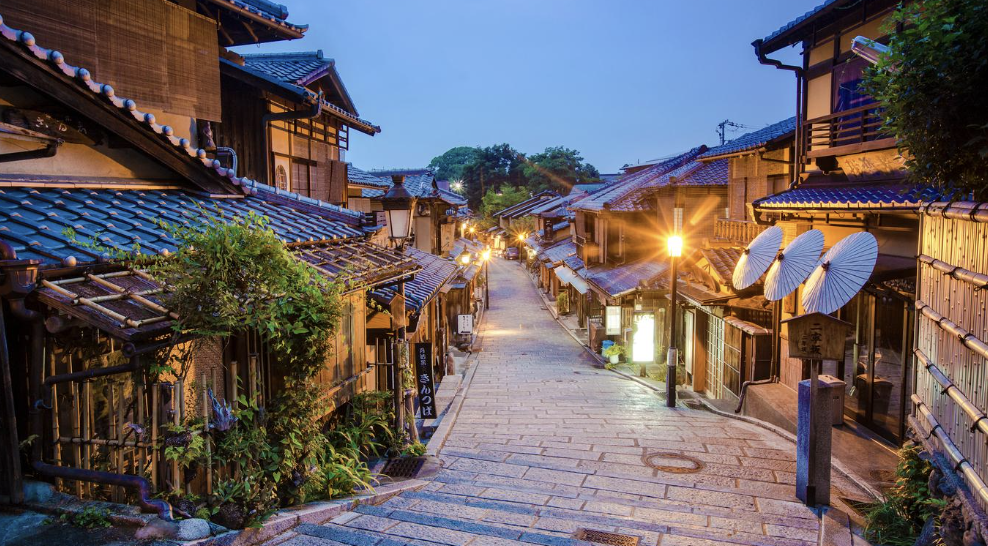
There is a small pond in the upper right, but other than that, nothing in the way of natural features. Combined with the dreary burned tower in Crystal, the impression the city gives is somber and constrained.
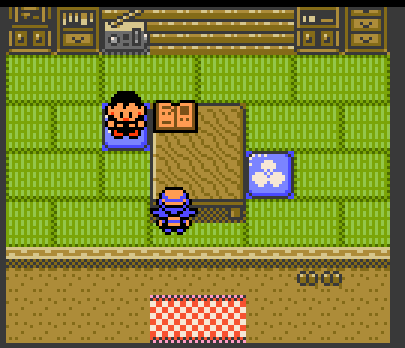
All the houses in Ecruteak use the traditional style.
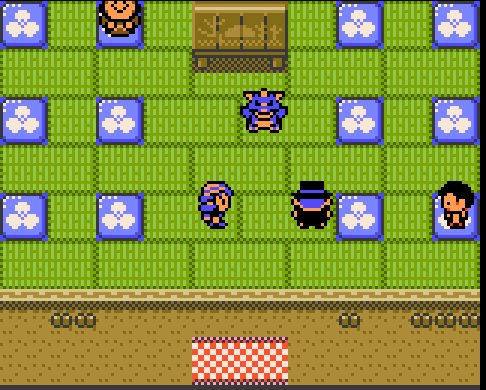
The dance theatre uses the traditional style, but expanded. A cute detail here is there are more than two pairs of shoes at the entrance!
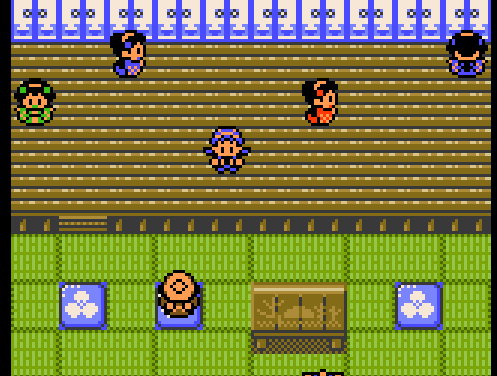
I liked pretending to be one of the dancers as a kid and twirl in place. I like that they made the edge of the platform a jumpable ledge.
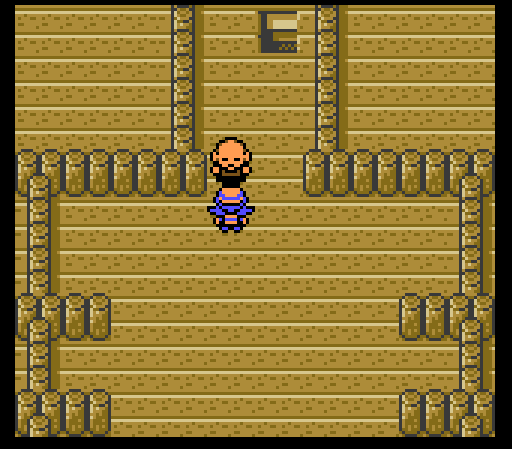
The entrance to the Tin Tower uses the same tiling as Sprout Tower.
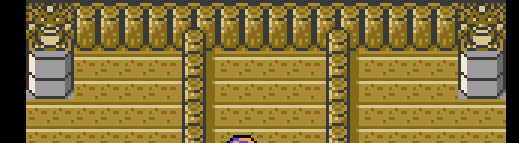
Little guys on pedestals.
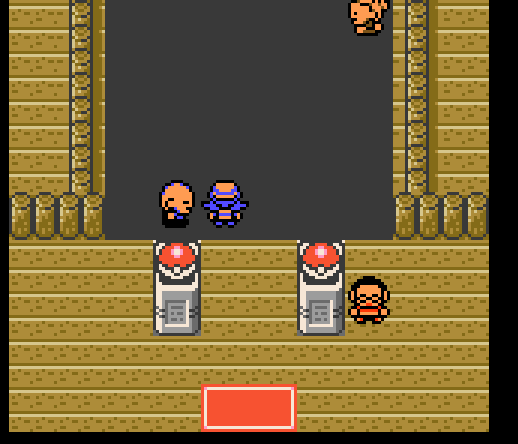
Morty's gym also uses the same tiling.
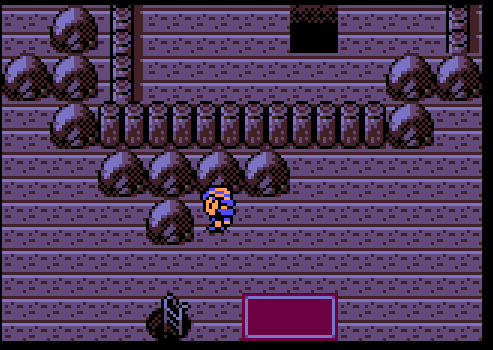
Burned Tower, appropriately, uses a palette shifted version of the tiling in Tin Tower.
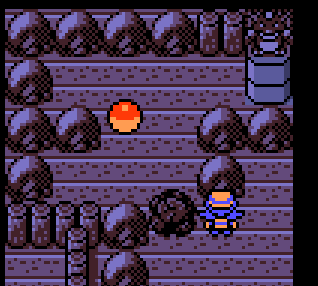
A little guy also in the corner here.
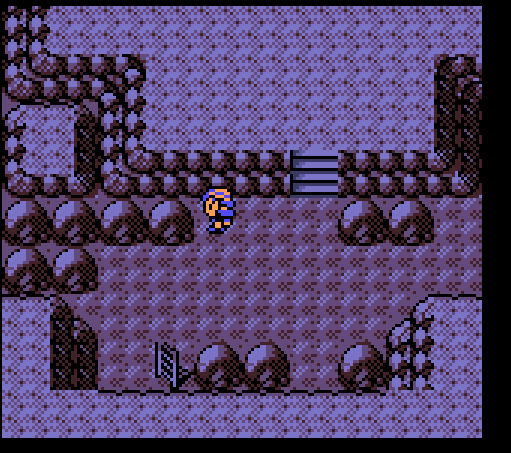
Standard cave fare underground.
Olivine City
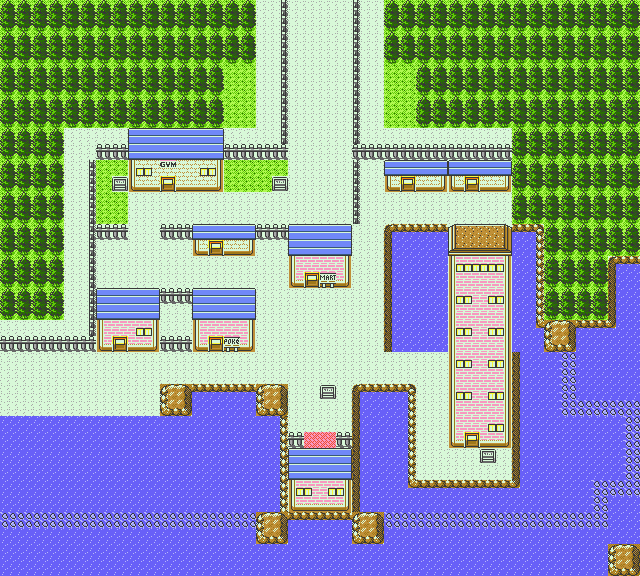
Olivine City is another highly urbanized city, though there are grass patches surrounding the gym. Major landmarks include the lighthouse. You can surf a lot around this city, which makes sense as it is a port. The major decoration appears to be fences. For some reason, there are fences between a house and its adjacent Pokemon center. Why? Wanting to force the player through a certain route? There is heterogeneity in this city, but it is mostly boring. There is little of visual interest. The lighthouse mostly looks like a regular house that happens to be tall (indeed, the bottom tiles and just the tiles for the regular house.)
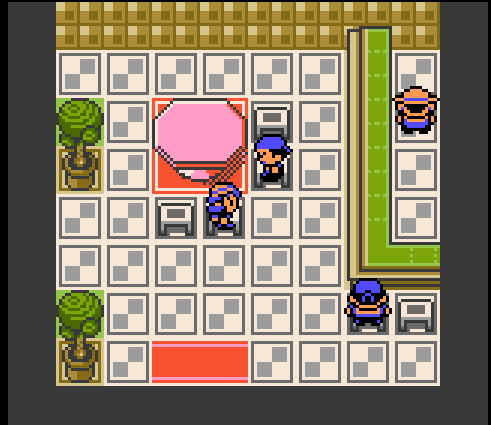
Clearly these guys have the same supplier as Goldenrod Game Corner, although the wallpaper is interesting and has a 70s vibe to it.
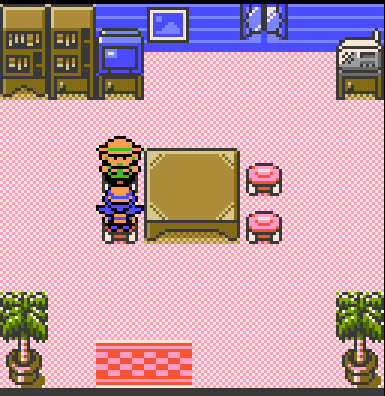
Olivine has modern houses.
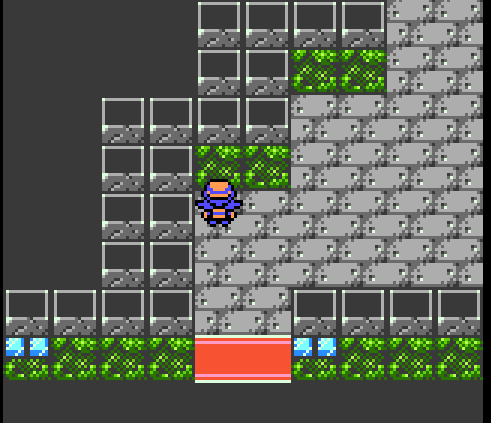
Very cool industrial vibe here in the lighthouse.
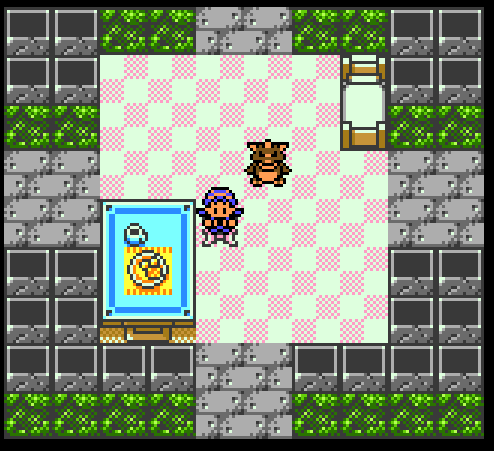
An entire room has been set up here. Ampharos is apparently a lighthouse worker. The bed must be for Jasmine when she was taking care of Amphy, unless Pokemon can also enjoy eggs, toast, and coffee. Very fun detail that the whole room flashes when you talk to Amphy. Amphy also has a color-shifted palette of the 'kaiju' overworld sprite.
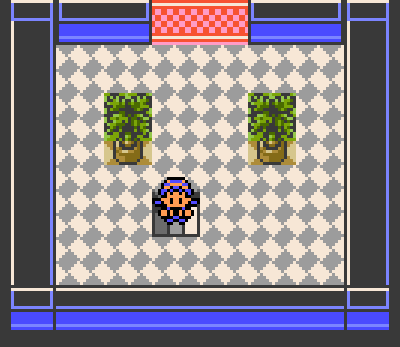
Let's go take a cruise. More unusual plants. How many potted plants are there in this game?
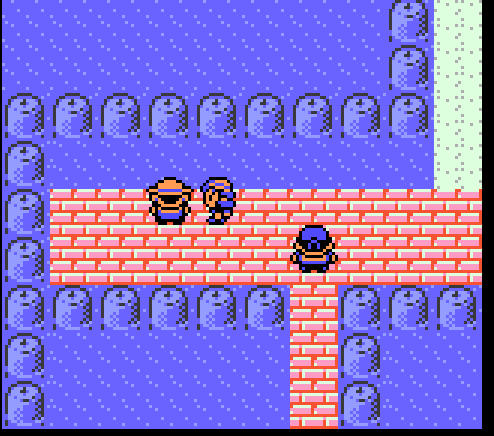
Buoys! How fun is that they are using buoys as the border here? As an aside, this is not the same pink tiling as is used in Goldenrod.
Cianwood City
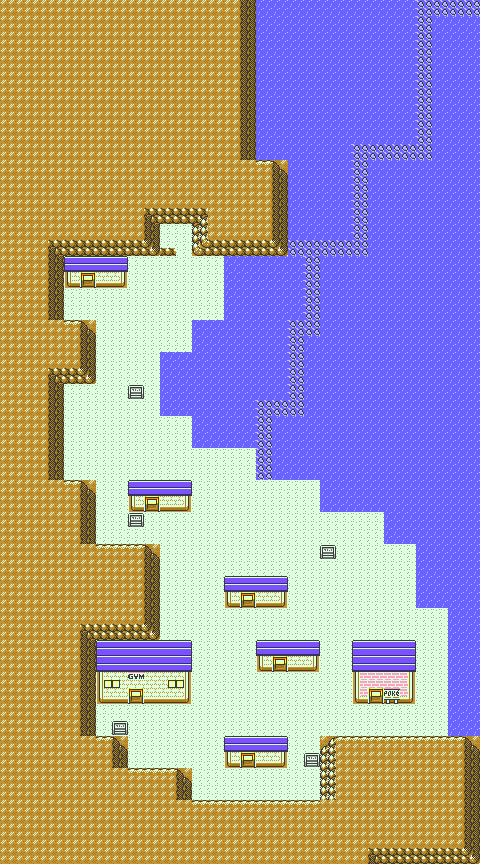
Probably the worst town, layout wise. I love the jagged placement of the houses, and it is interesting that they are all the small variants, with only official buildings having the taller houses. But there is literally nothing of interest here. There is a small ledge to the north that was placed solely for Suicune to jump off. There are rocks blocking in the northern part of the town in Crystal as well, to not spoil the Suicine surprise, but it also blocks off part of the sea for no reason.
There is only one type of paving, which makes sense as this is a 'city' built on an island that appears to be extremely rocky. But this leads to monotony in color choices. All parts of Cianwood look the same. The jagged shape of the mountain at least gives the city a unique shape.
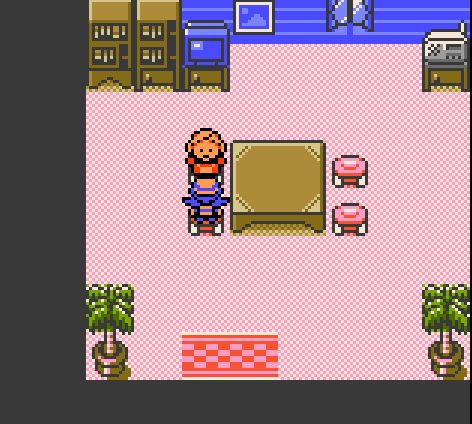
Cianwood has modern interiors.
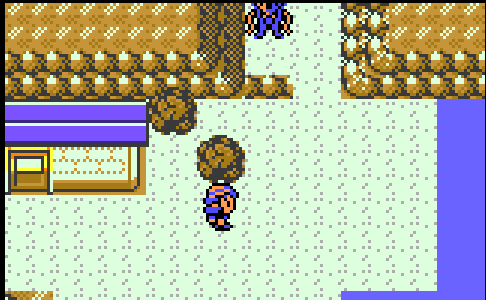
Huh, wonder who that is. Anyway, check out the fun breakable rocks. About the only fun feature on Cianwood.
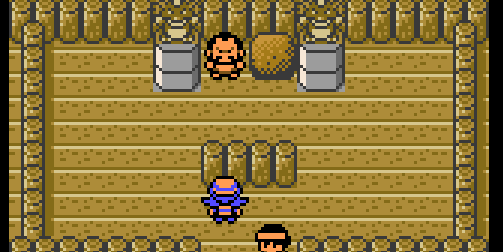
I will give Cianwood credit in that having Chuck move a boulder only movable by Pokemon with his bare hands and toss it off screen was a very impressive move.
Mahogany Town
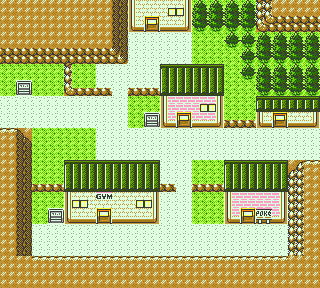
The town is very cozy, with the general space of the town being quite small and cramped - the entire space is basically a square. The buildings are very close to the borders. Despite this, I like this town. The paving suggests that there are small but definite streets throughout the town. There is a good ratio of greenery to paving, which suggests the town is not uber-rustic but still in touch with its environment.
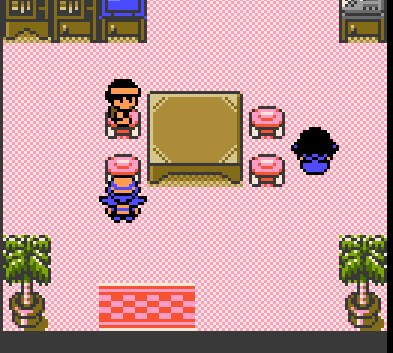
Mahogany Town has only one residential house and it's in the modern style.
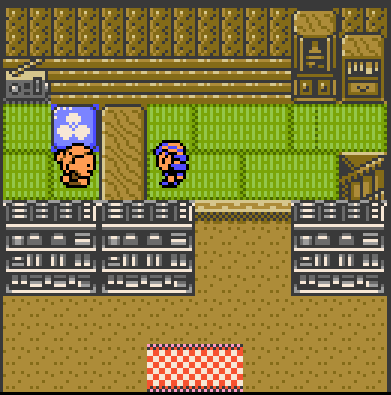
The shop, curiously, is traditionally styled. Even has an incense burner in the upper right.
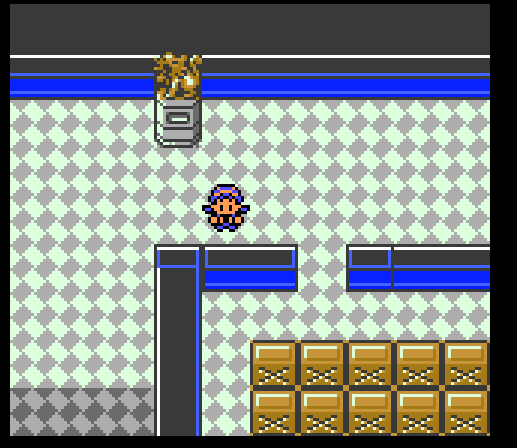
Many boxes marked with an 'x' and the Persian statue that rats on you. This underground area is a little repetitive, although they do have unique tiles here.
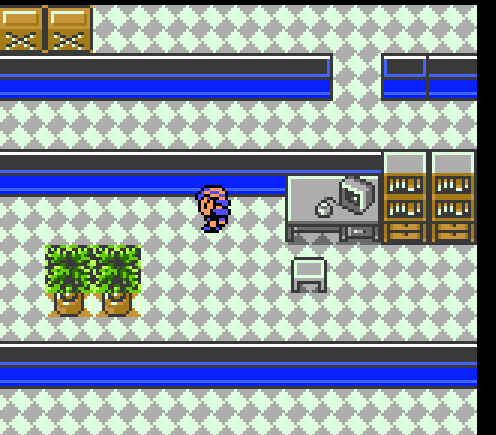
Important to keep your potted plants in your evil underground lair. Studies show having plants indoors increases mood.
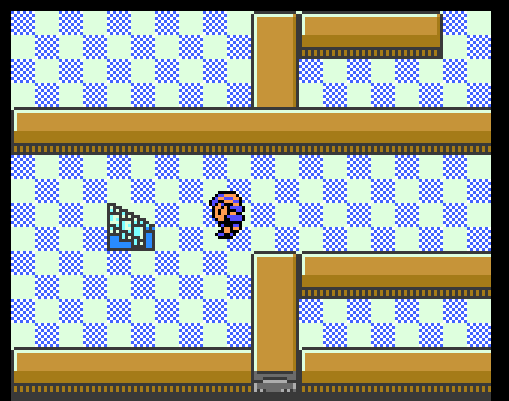
Not loving this dithered checkerboard. The stairs are nifty, though, suggesting glass paneling.
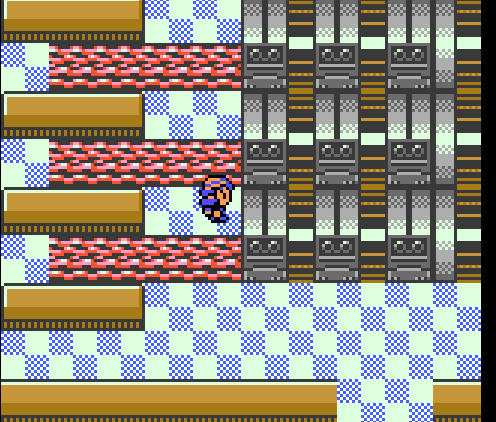
I think these are supposed to be tangled red wires... but they gave me such an unpleasant impression as a kid. There is some sort of generator (?) in the middle.
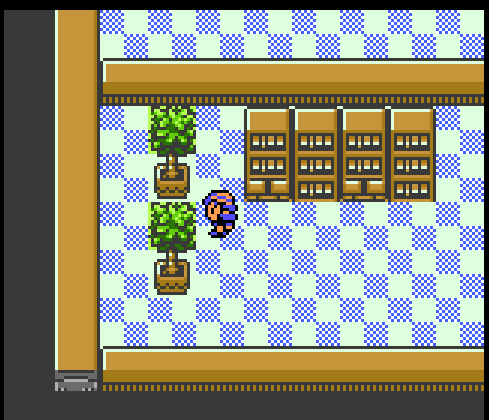
Spiky potted plants this time.
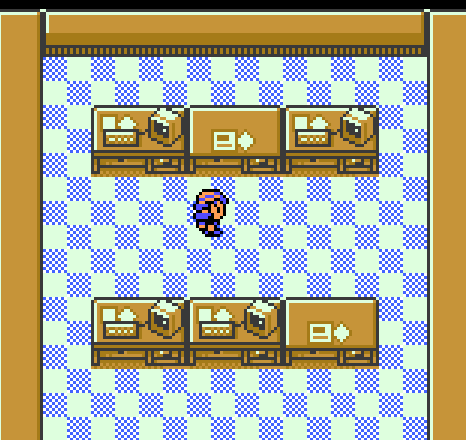
Among the many cruel and exploitative practices Team Rocket has, they have open plan offices for their workers.
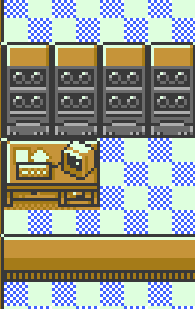
Are these reel to reel tape machines?
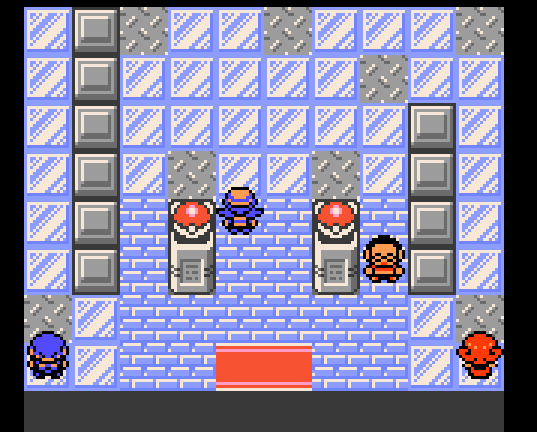
Ice and grippy panels in the gym.
Blackthorn City
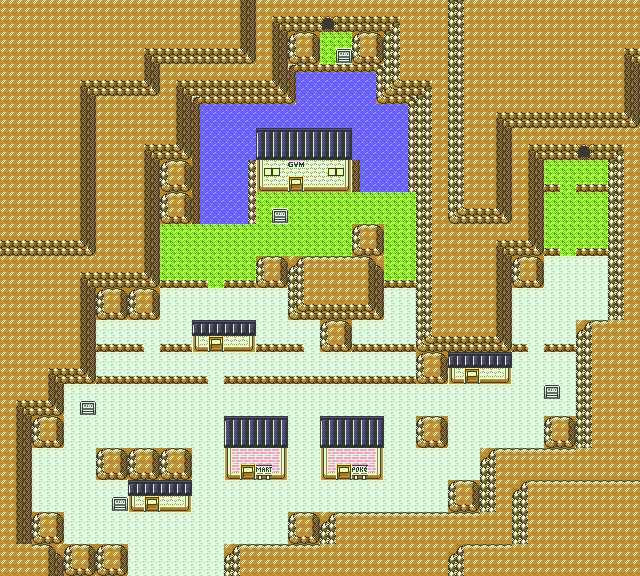
The final town. This settlement appears to have been built on a mountainside, with the ledges implying differing levels of elevation. There are rocks throughout the town, which suggests that the area was not totally cleared before settling. This lends an austere, rugged feel to the town. There are, however, still areas of greenery near the entrance to the Ice Cave and near the gym. There is a lake behind the Gym, though by this point you will have surf, so there is no secret left to uncover.
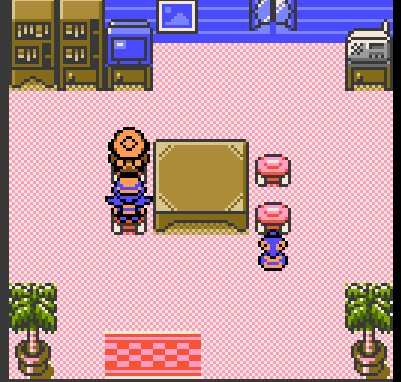
Blackthorn has modern houses.
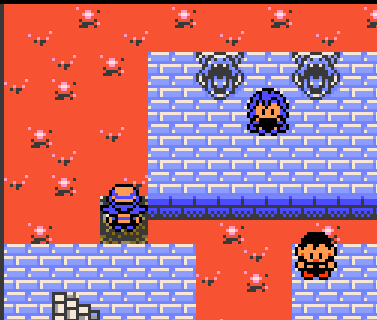
The animated lava is a nice touch. When I was a kid, a neighbor told me your game would be permanently corrupted if you stepped into the lava. This is obviously nonsense, but it freaked me out. I have to give Claire props for having lava inside an enclosed area, which matches Falkner's bottomless void for sheer danger. The Dragon heads are a nice touch.